 Lýsigagnagátt
ESRI Shapefile
Type of resources
Available actions
Topics
INSPIRE themes
Keywords
Contact for the resource
Provided by
Years
Formats
Representation types
Update frequencies
status
Scale
Resolution
-

Riparian zones represent transitional areas occurring between land and freshwater ecosystems, characterised by distinctive hydrology, soil and biotic conditions and strongly influenced by the stream water. They provide a wide range of riparian functions (e.g. chemical filtration, flood control, bank stabilization, aquatic life and riparian wildlife support, etc.) and ecosystem services. The Riparian Zones products support the objectives of several European legal acts and policy initiatives, such as the EU Biodiversity Strategy to 2020, the Habitats and Birds Directives and the Water Framework Directive. Green Linear Elements (GLE) are ecologically significant, structural landscape elements which act as important dispersion vectors of biodiversity. GLEs comprise hedgerows and lines of trees and offer a wide range of ecosystem services: they are linked to both landscape richness and fragmentation of habitats, with a direct potential for restoration, and contribute also to hazard protection. Green linear elements form part of the Green Infrastructure and are specifically addressed in the EU Biodiversity Strategy 2020. The GLE product provides reliable and detailed geospatial information on the occurrence and spatial distribution of: Small linear vegetation features such as hedgerows, scrub and tree rows with a minimum length of 100m and a width of up to 10m; Isolated patches of trees and scrub with a size between 500 m² and 0.5 ha. Green linear elements including trees and hedgerows with 100m minimum length and 500 m² Minimum Mapping Unit (MMU)
-

Þekjan sýnir orkuspársvæði sem koma fram í orkuspá Orkustofnunar. Það eru svæðin Suðurnes, Reykjavík, Vesturland, Vestfirðir, Norðurland, Austurland og Suðurland. Svæðin eru aðeins öðruvísi en í hefðbundinni landshlutaskiptingu þar sem sú skipting er til komin vegna uppbyggingar flutningskerfisins.
-
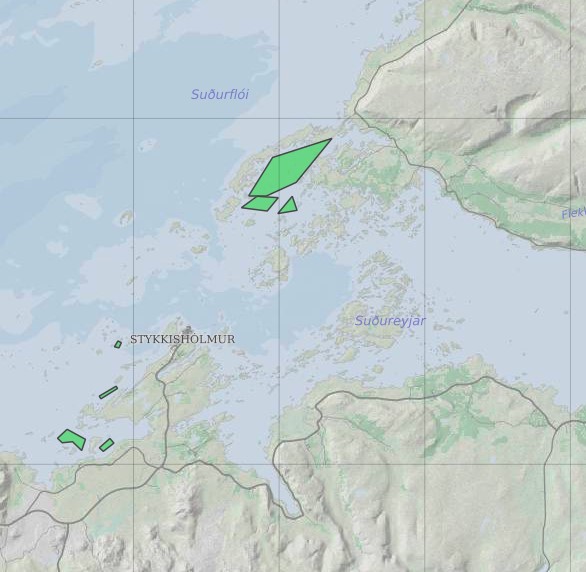
Ræktunarsvæði er afmarkað svæði sjávar nægjanlega stórt til að rúma þann ræktunarbúnað sem notaður er á viðkomandi svæði. Yfirleitt er um að ræða línur sem strekktar eru á milli flot bauja eða sérstaka ræktunarfleka með lóðréttar ræktunarlínur fáeina metra niður undir yfirborð sjávar . Svæðið er merkt með löglegum sjómerkjum þannig að sjófarendur eiga að geta varast þau, enda einnig merkt inn sjókort Landhelgisgæslunnar. Einungis er ræktuð Bláskel (Kræklingur).
-
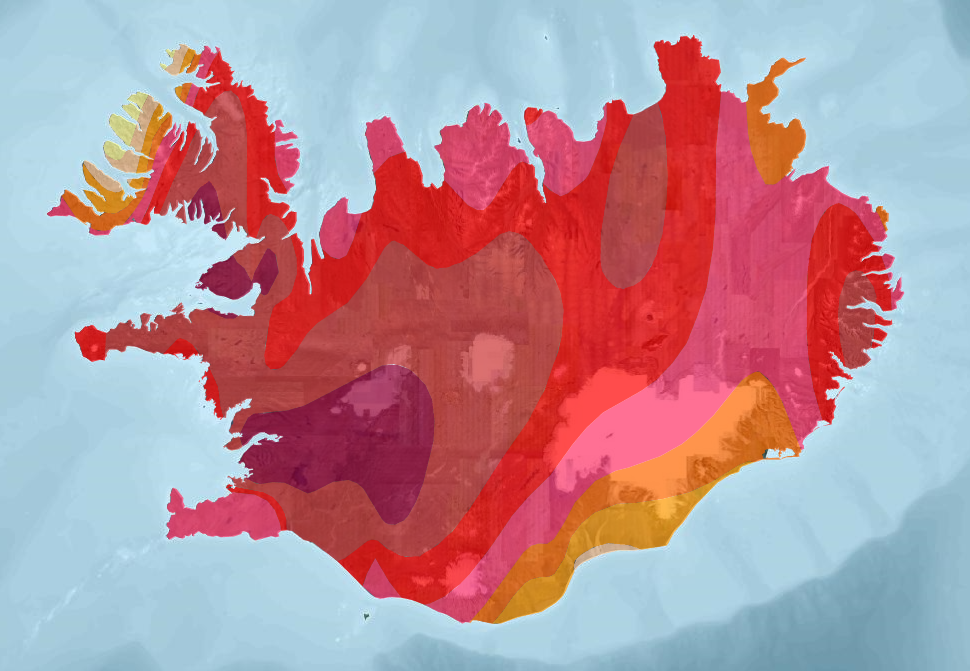
The dataset presents three layers of geothermal data from Iceland based on "Atlas of Geothermal Resources in Europe" (2002). Heat-flow density, Temperature at 1000 meters and Temperature at 2000 meters (1:10 000 000).
-
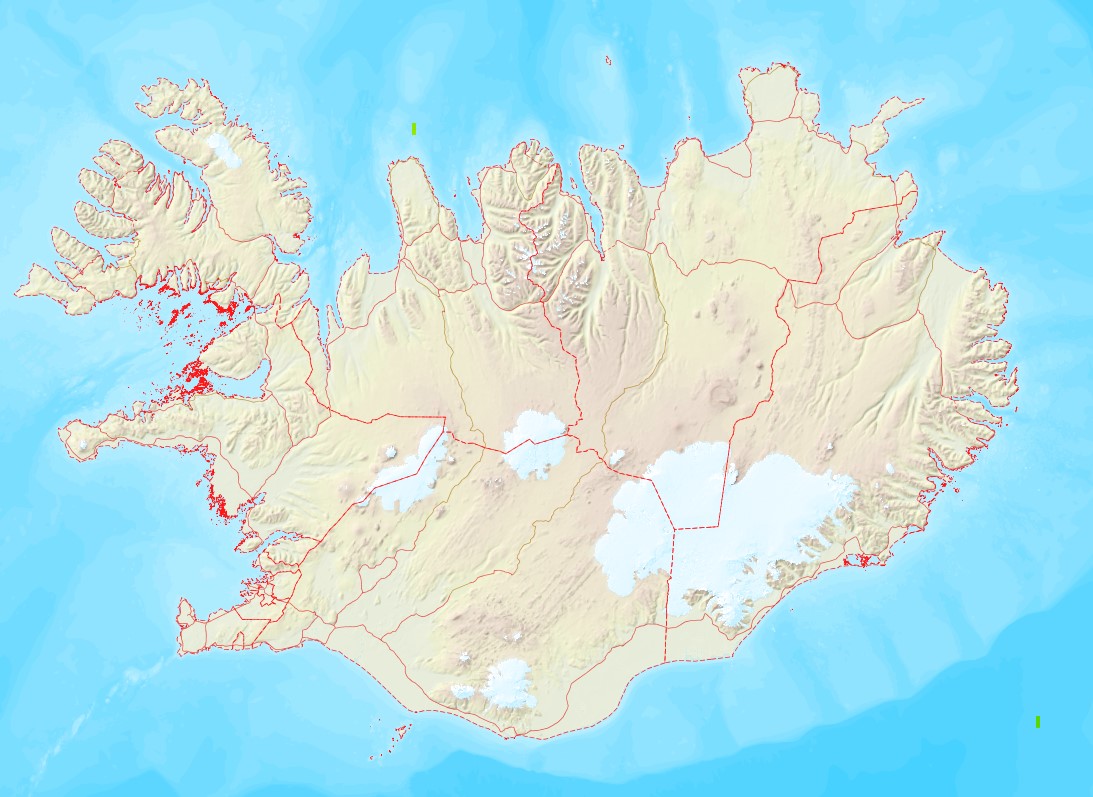
Gögnin innihalda skiptingu landsins í heilbrigðiseftirlit. Skv 45. grein laga 7/1998 hefur Umhverfisstofnun umsagnarvald varðandi mörk eftirlitssvæða.
-

Vinsamlega hafið samband við Umhverfisstofnun vegna nánari upplýsinga.
-
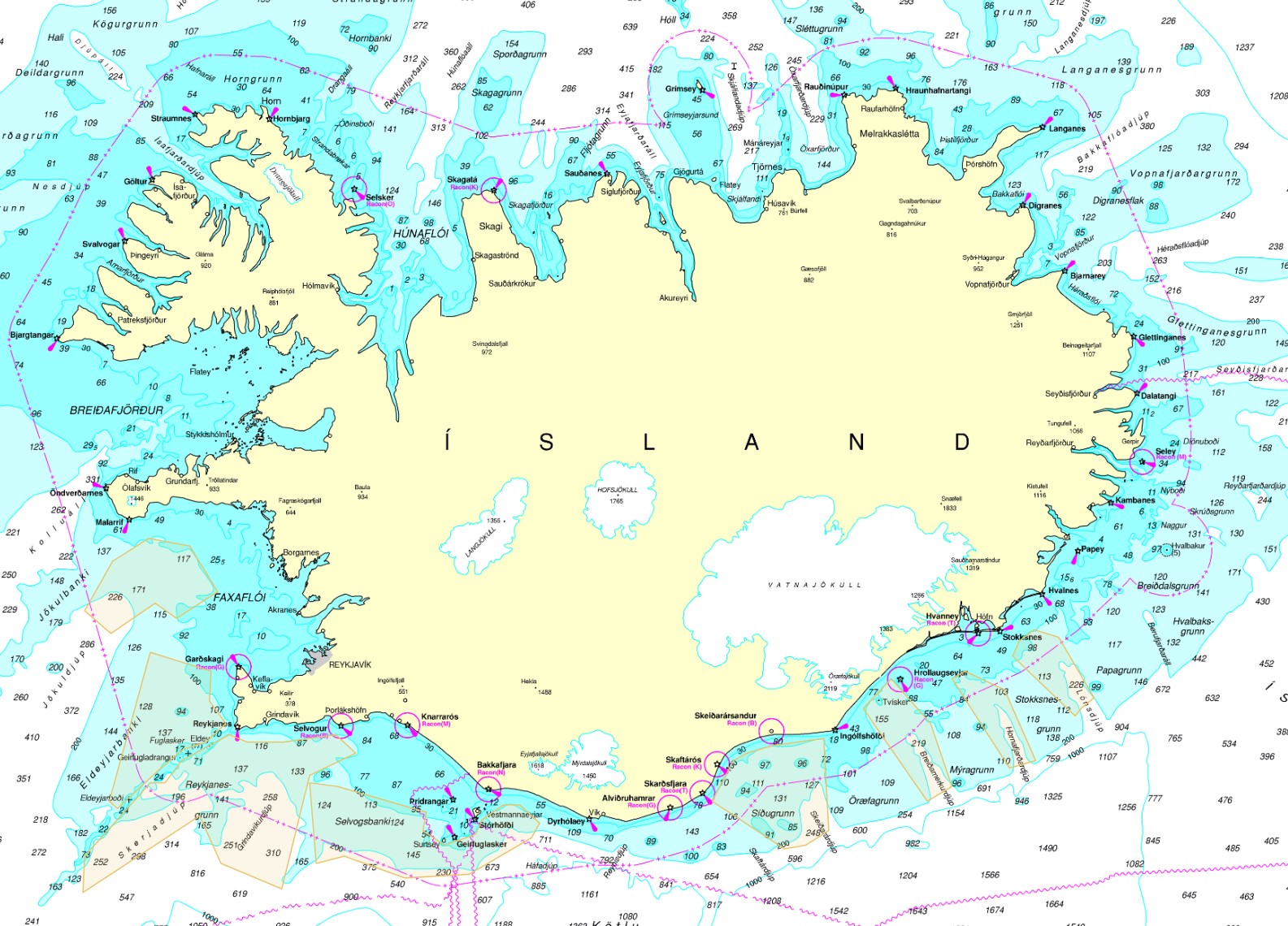
Skilgreind veiðisvæði eru til dæmis humarveiðisvæði, sæbjúgnaveiðisvæði, dragnótaveiðisvæði, o.s.frv. Skilgreind veiðisvæði eru svæði þar sem heimilt er að veiða með tilteknum veiðarfærum, sem annars staðar er bannað að veiða með.
-
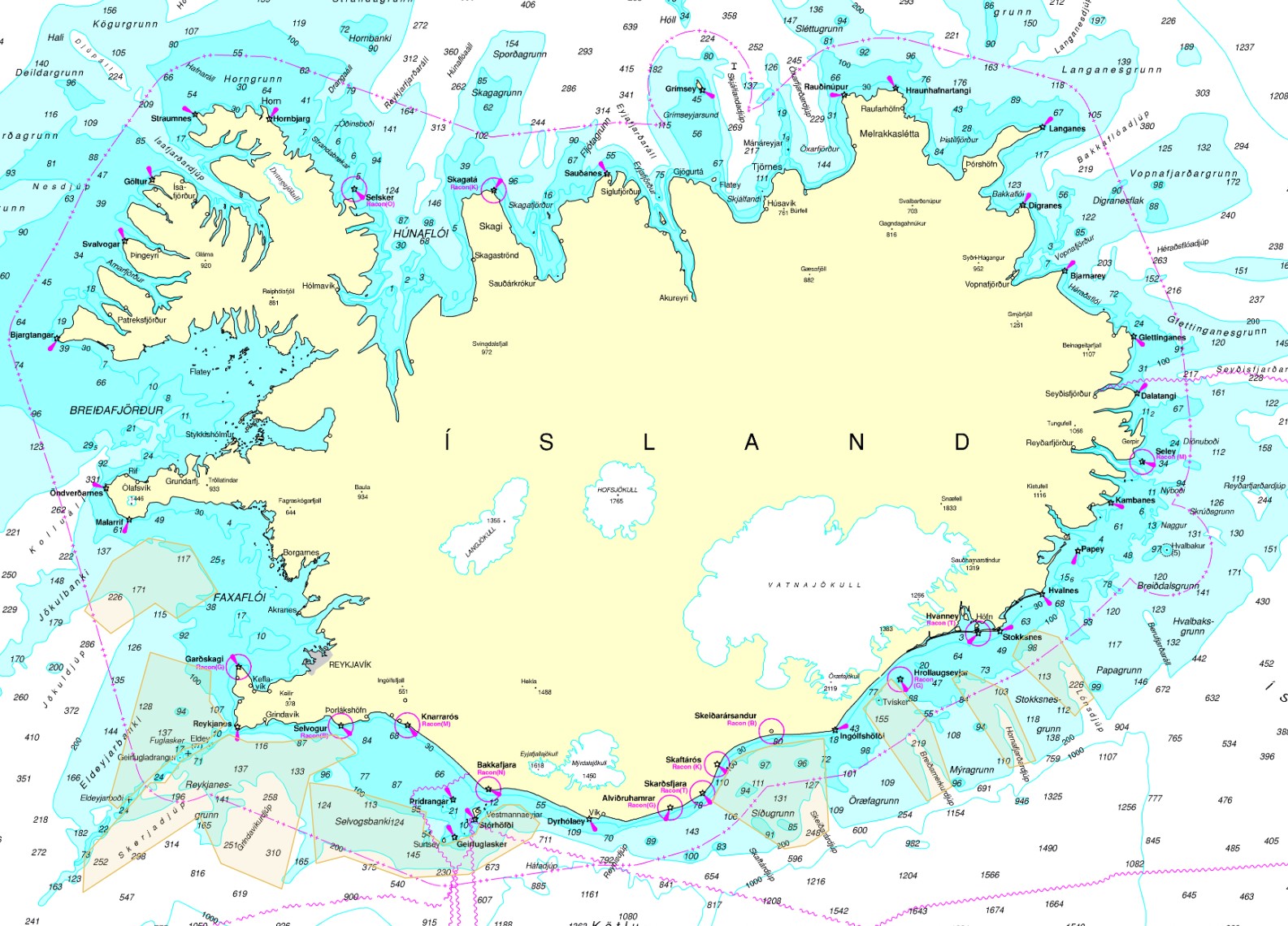
Skyndilokanir Upplýsingar um skyndilokanir veiðisvæða koma úr gagnagrunnum Fiskistofu. Frá árinu 2020 hefur ákvörðunartaka um skyndilokanir veiðisvæða fyrir tilteknum veiðum verið í höndum Fiskistofu en var áður hjá Hafrannsóknarstofnun. Skyndilokun varir að jafnaði í 2 vikur. Tímamörk lokunar eru alltaf tilgreind með ákvörðun skyndilokunar. Ákvörðun um skyndilokun veiðisvæðis er gerð þegar mælingar á afla stenst ekki viðmiðunarmörk Hafrannsóknarstofnunar en einnig til að loka svæðum sem hafa staðbundinn kvóta. Reglugerðalokanir Reglugerðir eru ákvarðaðar af Atvinnuvega- og nýsköpunarráðuneytinu (ANR) og skilgreina bannsvæði og tímabil, þar sem fiskveiðar eru bannaðar með tilteknum veiðarfærum. Sumar reglugerðarlokanir eru árstíðarbundnar, til dæmis friðun vegna hrygninga þar sem svæðum sem fiskur kemur til hrygninga er lokað á ákveðnum tíma ársins.
-
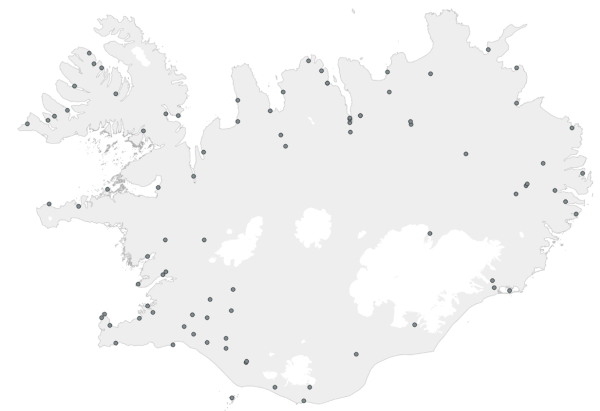
Gögnin veita upplýsingar um hvar hægt er að losa úr ferðasalernum. Í reglugerð um hollustuhætti segir að á tjald- og hjólhýsasvæðum eða í námunda við það skuli vera aðstaða til að tæma og hreinsa ferðasalerni. Rekstraraðili svæðisins skuli veita upplýsingar um og vísa á aðstöðuna, en einnig er hægt að leita upplýsinga um staðsetningu slíkrar aðstöðu annars staðar, t.d. hjá upplýsingamiðstöðvum og á bensínstöðvum. Árið 2012 tók Umhverfisstofnun saman lista yfir þá staði á landinu þar sem finna má aðstöðu til losunar ferðasalerna. Listinn er byggður á upplýsingum frá heilbrigðiseftirliti sveitarfélaganna.
-
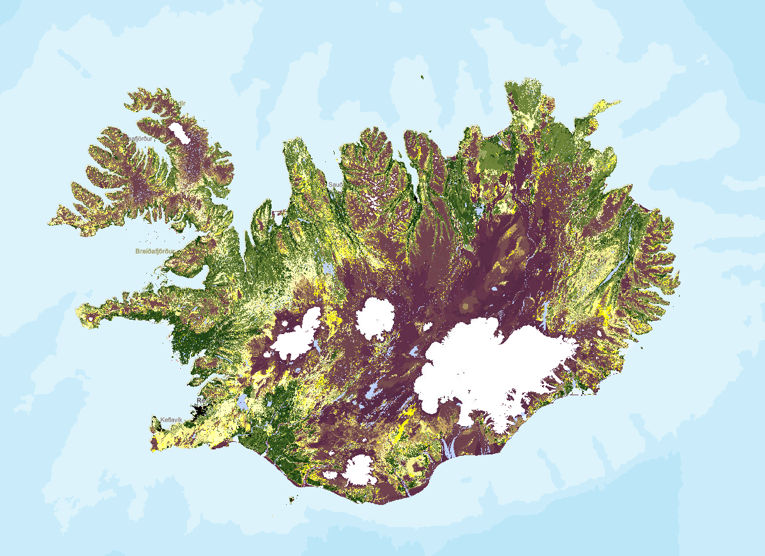
Stöðumat á ástandi gróður- og jarðvegsauðlinda Íslands. Landupplýsingaþekjan fyrir stöðumat Grólindar er á rastaformi. Nákvæmni gagna miðast við mælikvarða 1:100.000. Stöðumat GróLindar sýnir, á grófum kvarða, stöðu gróður- og jarðvegsauðlinda Íslands eins og hún er í dag. Stöðumatið er unnið upp úr kortlagningu vistgerðaflokka Náttúrufræðistofnunar Íslands frá 2016 og kortlagningu á jarðvegsrofi á vegum Rannsóknastofnunar landbúnaðarins og Landgræðslunni frá 1997. Landgræðslan og Skógræktin voru sameinaðar 1. janúar 2024 og ber stofnunin heitið Land og skógur. Frekari upplýsingar um aðferðafræðina á bak við stöðumatið má sjá í ritinu: Bryndís Marteinsdóttir, Elín Fjóla Þórarinsdóttir, Guðmundur Halldórsson, Jóhann Helgi Stefánsson, Jóhann Þórsson, Kristín Svavarsdóttir, Magnús Þór Einarsson, Sigþrúður Jónsdóttir og Sigmundur Helgi Brink, 2020. Stöðumat á ástandi gróður- og jarðvegsauðlinda Íslands. Aðferðafræði og faglegur bakgrunnur. Rit Landgræðslunnar nr. 3. Gunnarsholt, Ísland. https://grolind.is/wp-content/uploads/2020/06/GroLind_stodumat_18_06_2020.pdf Hér er slóð á vefsja þar sem eru upplýsingar um gróður- og jarðveggsauðlindir landsins: https://portal.land.is/portal/apps/dashboards/da2d198a1e3b472da664f100fb4ea7bb Vöktun GróLindar á þessum auðlindum hófst árið 2019. Markmiðið er að með samþættingu á fyrirliggjandi gögnum, nýjum fjarkönnunargögnum, upplýsingaöflun á vettvangi í samstarfi við almenning og neti af mælireitum fáist heildaryfirlit um stöðu þessara mála.