environment
Type of resources
Available actions
Topics
INSPIRE themes
Keywords
Contact for the resource
Provided by
Years
Formats
Representation types
Update frequencies
status
Scale
-
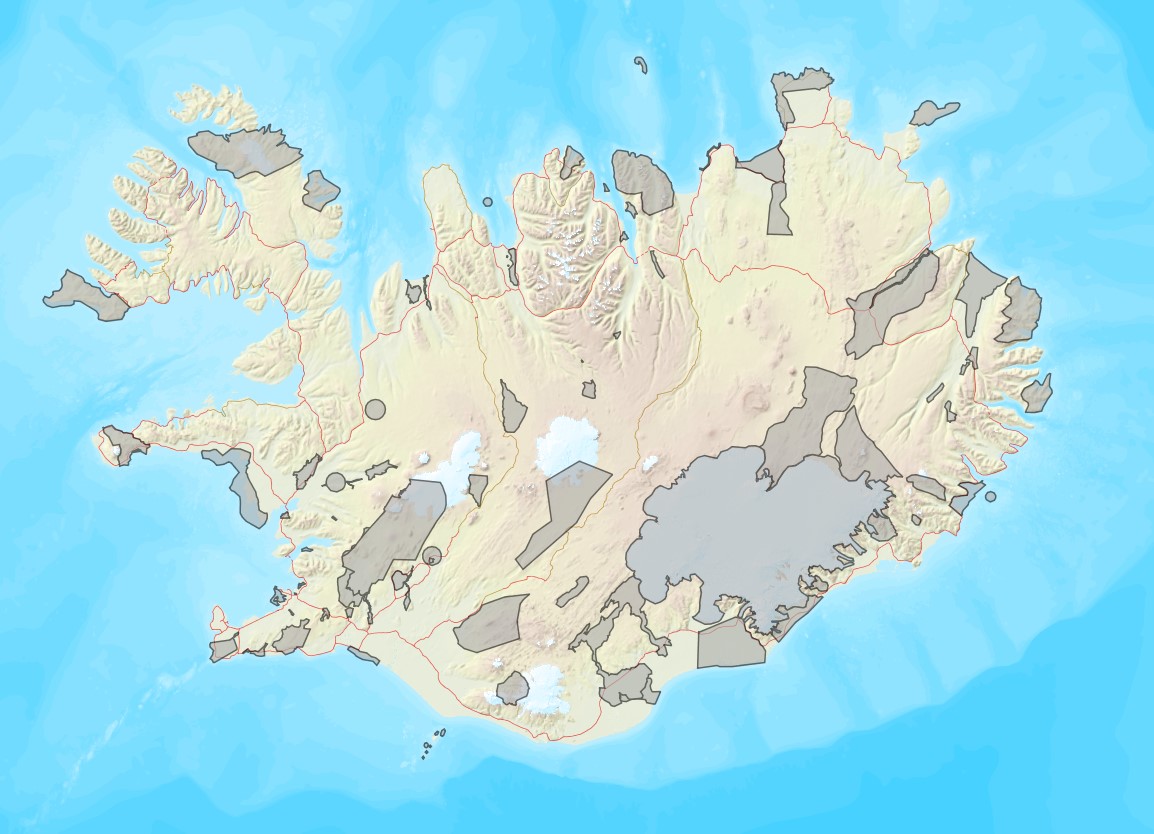
[IS] Staðsetningar borkjarna og borsvarfs í Borkjarnasafni Náttúrufræðistofununnar. Náttúrufræðistofnun hefur það hlutverk að varðveita borkjarna sem falla til við jarðboranir víða um land við framkvæmdir eða í rannsóknaskyni. Borkjarnar og borsvarf veita innsýn í þann hluta berggrunnsins sem ekki er sýnilegur á yfirborði jarðar og eru nauðsynleg gögn við jarðvísindalegar rannsóknir, hvort sem um ræðir grunnrannsóknir eða hagnýtar rannsóknir við undirbúning mannvirkjagerðar eða nýtingar náttúruauðlinda. Safnið geymdi í lok árs 2024 um 100 kílómetra af borkjörnum auk borsvarfs úr borholum sem samtals eru yfir 470 km að lengd. Telur gagnagrunnur safnsins nú tæplega 11 þúsund kassa af borkjörnum úr um 1.800 borholum, sem og um 5.000 bakka af borsvarfi úr um 2.300 borholum. Í safninu er einnig talsverður fjöldi sýna sem tekin hafa verið úr borkjörnum og varðveitt aðskilin frá meginhluta kjarnanna. WMS þjónusta: https://gis.natt.is/geoserver/wms WFS þjónusta: https://gis.natt.is/geoserver/wfs Nafn á gagnasetti: NATT:drillcore_wfs_export_2, NATT:cuttings_wfs_export_2 [EN] Locations of drill cores and cuttings in the Drill Core Library of Natural Science Institute of Iceland. The Drill Core Library (DCL) of the Natural Science Institute of Iceland comprises over 100 km of drill cores and large quantities of drill cuttings from scientific and applied research drilling throughout Iceland. Drill cores and drill cuttings enable us to examine those portions of the bedrock that are not exposed at the surface. They are essential sources of data for geoscientific research, both fundamental research and applied studies for construction or utilization of natural resources. The DCL includes cores from research drilling in Surtsey in 1979 and 2017, which shed remarkable light on the inner evolution of the island after the eruption, and a core from a 2 km-deep research borehole in drilled in Reyðarfjörður in 1978. The collection also includes a vast array of cores drilled in connection with the construction of tunnels and hydroelectric power plants and other research on energy resources. WMS service: https://gis.natt.is/geoserver/wms WFS service: https://gis.natt.is/geoserver/wfs Dataset name: NATT:drillcore_wfs_export_2, NATT:cuttings_wfs_export_2
-
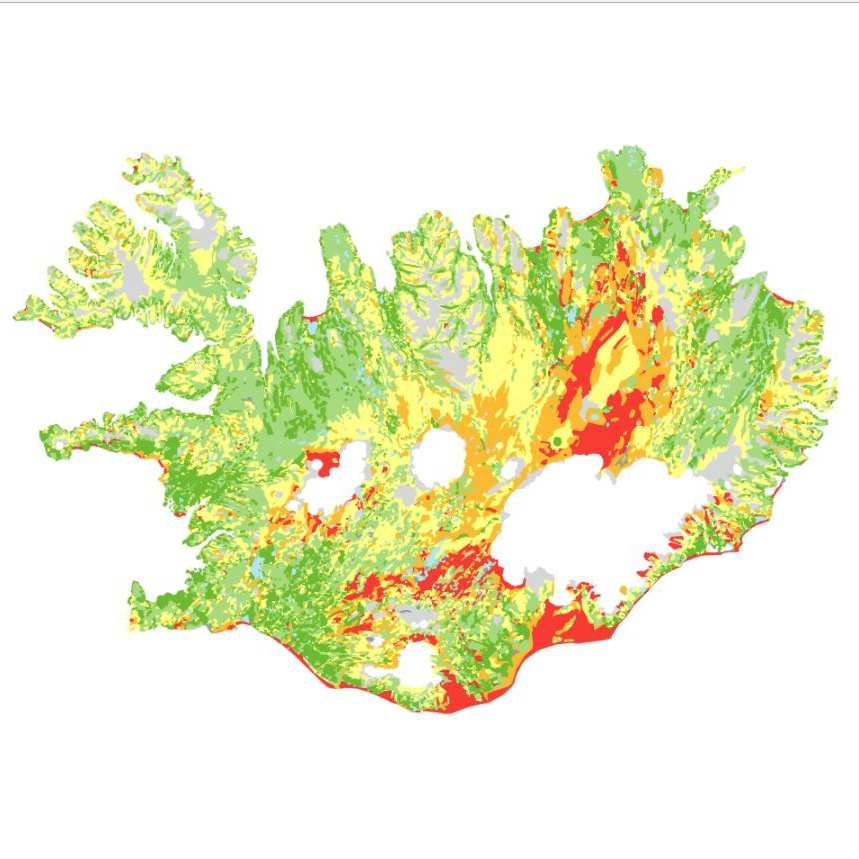
The Corine Land Cover datasets CLC2000, CLC2006 and CLC change 2000-2006 areproduced within the frame of the GMES land monitoring project. Corine Land Cover (CLC) provides consistent information on land cover and land cover changes across Europe. This inventory was initiated in 1985 (reference year 1990) and established a time series of land cover information with updates in 2000 and 2006.CLC products are based on photointerpretation of satellite images by national teams of participating countries - the EEA member and cooperating countries – following a standard methodology and nomenclature with the following base parameters: 44 classes in the hierarchical three level Corine nomenclature; minimum mapping unit (MMU) for status layers is 25 hectares; minimum width of linear elements is 100 metres; minimum mapping unit (MMU) for Land Cover Changes (LCC) for the change layers is 5 hectares. The resulting national land cover inventories are further integrated into a seamless land cover map of Europe.Land cover and land use (LCLU) information is important not only for land change research, but also more broadly for the monitoring of environmental change, policy support, the creation of environmental indicators and reporting. CLC datasets provide important datasets supporting the implementation of key priority areas of the Environment Action Programmes of the European Union as protecting ecosystems, halting the loss of biological diversity, tracking the impacts of climate change, assessing developments in agriculture and implementing the EU Water Framework Directive, among others.More about the Corine Land Cover (CLC) and Copernicus land monitoring data in general can be found at http://land.copernicus.eu/.
-
Gagnasett sem sýnir yfirlitsupplýsingar um helstu svæði þar sem landgræðsla er stunduð og Land og skógur kemur að á einn eða annan hátt. Undanskilin eru þó svæði í verkefninu Bændur græða landið.
-
[IS]: Drónamyndir af svæðum þar sem fram fer vöktun á náttúru Íslands. Aflað af Náttúrufræðistofnun. Fyrir frekari upplýsingar um gögnin er hægt að hafa samband við Náttúrufræðistofnun. Upplýsingar um drónamyndirnar er að finna í footprint lagi. Þar má meðal annars sjá hvenær myndirnar eru teknar og hægt að finna niðurhalslink fyrir þær. WMS þjónusta: https://gis.lmi.is/mapcache/web-mercator/wms Nafn á gagnasettum: drones_orthographics, drones_orthographics_2020. drones_orthographics_2021, drones_orthographics_2022, drones_orthographics_2023, drones_orthographics_2024, drones_orthographics_2025 [EN] Drone imagery of areas where monitoring of Iceland’s natural environment is conducted. Collected by Natural Science Institute of Iceland. For more information, please contact Natural Science Institute of Iceland. Information about the drone imagery can be found in a footprint layer. It includes the capture dates of the images and provides download links among other things. WMS service: https://gis.lmi.is/mapcache/web-mercator/wms Nafn á gagnasettum: drones_orthographics, drones_orthographics_2020, drones_orthographics_2021, drones_orthographics_2022, drones_orthographics_2023, drones_orthographics_2024, drones_orthographics_2025
-
The Corine Land Cover datasets CLC2000, CLC2006and CLC change 2000-2006 are produced within the frame of the GMES land monitoringproject.Corine Land Cover (CLC) provides consistent information on land cover and land cover changes across Europe. This inventory was initiated in 1985 (reference year 1990) and established a time series of land cover information with updates in 2000 and 2006.CLC products are based on photointerpretation of satellite images by national teams of participating countries - the EEA member and cooperating countries – following a standard methodology and nomenclature with the following base parameters: 44 classes in the hierarchical three level Corine nomenclature; minimum mapping unit (MMU) for status layers is 25 hectares; minimum width of linear elements is 100 metres; minimum mapping unit (MMU) for Land Cover Changes (LCC) for the change layers is 5 hectares. The resulting national land cover inventories are further integrated into a seamless land cover map of Europe.Land cover and land use (LCLU) information is important not only for land change research, but also more broadly for the monitoring of environmental change, policy support, the creation of environmental indicators and reporting. CLC datasets provide important datasets supporting the implementation of key priority areas of the Environment Action Programmes of the European Union as protecting ecosystems, halting the loss of biological diversity, tracking the impacts of climate change, assessing developments in agriculture and implementing the EU Water Framework Directive, among others.More about the Corine Land Cover (CLC) and Copernicus land monitoring data in general can be found at http://land.copernicus.eu/.
-
Staðsetningar loftmælistöðva á Íslandi. Umhverfisstofnun skilar árlega loftgæðaskýrslum til Evrópsku umhverfisstofnunarinnar (EEA) og uppfylla þau gögn INSPIRE-tilskipanir varðandi flokkun stöðva. Rekstraraðilar geta breytt gögnum stöðva.
-
Umhverfisstofnun skal halda skrá yfir svæði þar sem er mengaður jarðvegur eða þar sem grunur er um mengun. Þar skulu koma fram upplýsingar um staðsetningu, stærð, tegund mengunar og ástæðu þess að svæði er mengað eða grunum leikur á mengun.
-
Gögnin sýna eldri mörk veiðisvæða á Íslandi. Vinsamlegast hafið sambandi við Umhverfisstofnun fyrir nánari upplýsingar.
-
Gögnin sýna mörk veiðisvæða. Fyrir nánari upplýsingar um gögnin er bent á að hafa samband við Umhverfisstofnun.
-
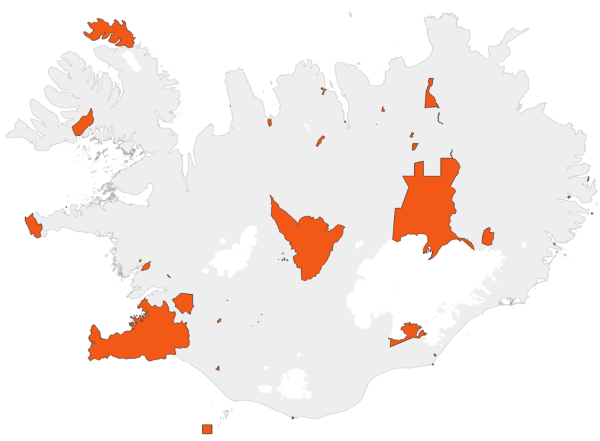
[IS] Gagnasettið sýnir staðsetningar botndýra sem hafa rannsökuð við íslandsstrendur. Innan íslenskrar efnahagslögsögu eru þekktar rúmlega 2.500 tegundir sjávardýra, en vísast eru þær umtalsvert fleiri. Tegundafjölbreytni hinna ýmsu dýrafylkinga á Íslandsmiðum er afar misvel þekkt en fastlega má gera ráð fyrir að hlutföllin séu svipuð og á heimsvísu. Upplýsingar um ýmsar tegundir sjávardýra á Íslandsmiðum eru á vefsíðum um dýrahópa, sjá: https://www.natt.is/is/leit-i-biota?kingdom_group.keyword=%2522D%25C3%25BDr%20%2528Animalia%2529%2522 [EN] The dataset shows the locations of benthic invertebrates that have been studied along the coasts of Iceland. Over 2,500 marine animal species have been found in Iceland’s exclusive economic zone, but there are certainly many more. Species diversity within some animal phyla in Icelandic waters is still poorly understood. Presumably, however, species fall under different phyla in similar proportions as elsewhere in the world. Information on marine animal species in Icelandic waters can be found on animal fact sheets on the NSII website.see: https://www.natt.is/is/leit-i-biota?kingdom_group.keyword=%2522D%25C3%25BDr%20%2528Animalia%2529%2522
Lýsigagnagátt